Ayodhyawhere faith meets stone
The sacred birthplace of Lord Rama, home to the Ram Mandir and a living trail of temples, rivers and ancient stories — all gathered in one gentle guide.
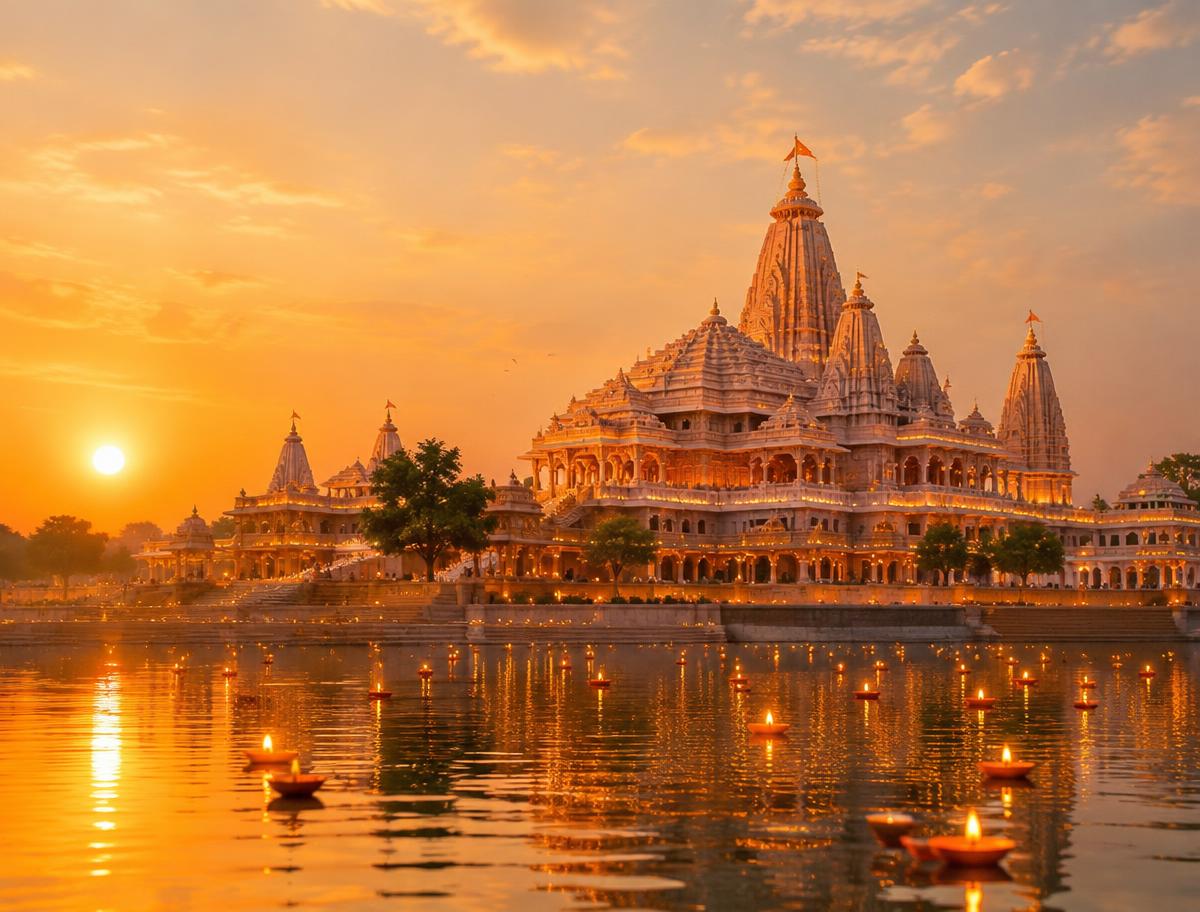
Ram Mandir
Rising over Ram Janmabhoomi — the birthplace of Lord Rama — the new Ram Mandir is one of the largest temples of our age, crowned by tiered shikharas that catch the morning light over the Saryu.
Temples & sacred sites
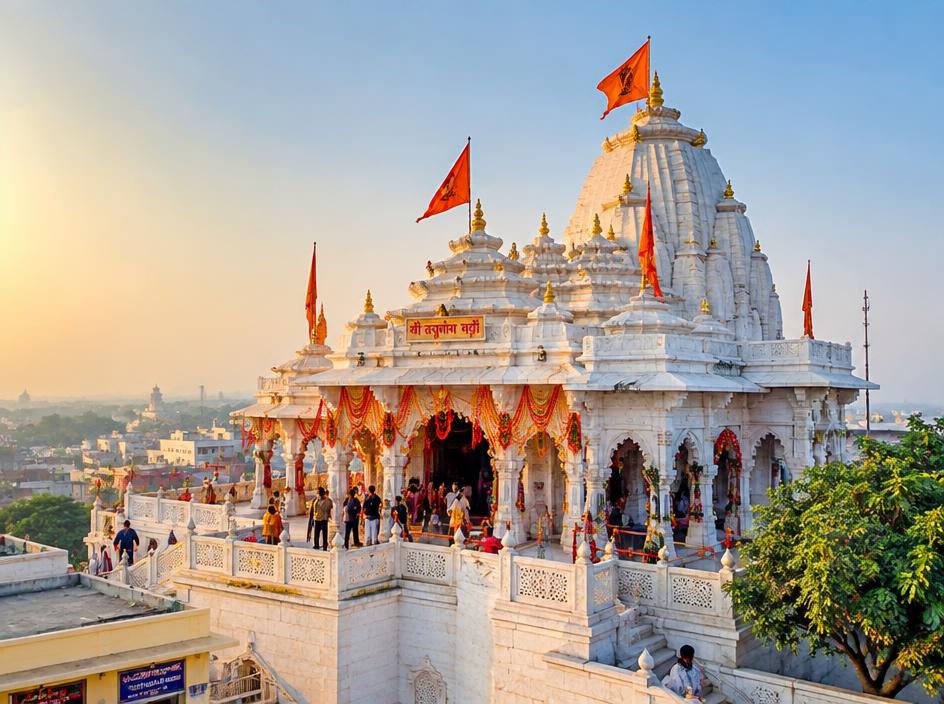
Hanuman Garhi
A 10th-century hilltop fortress temple of Lord Hanuman — tradition says you visit here first, before the Ram Mandir.
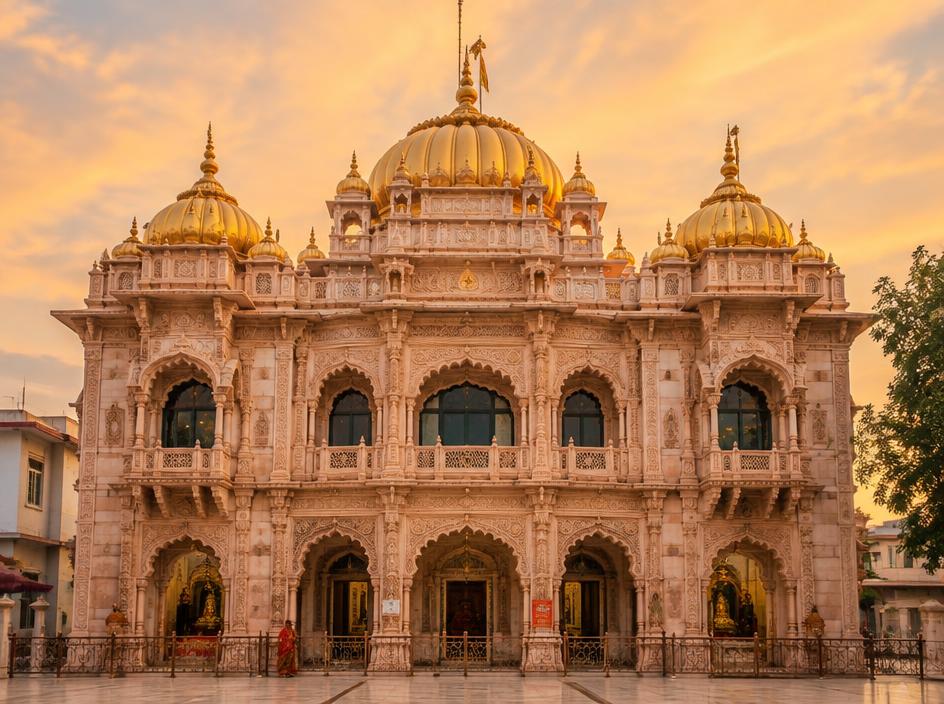
Kanak Bhawan
The 'Golden Palace', gifted to Sita by Queen Kaikeyi — famed for its gilded domes and idols of Ram and Sita.
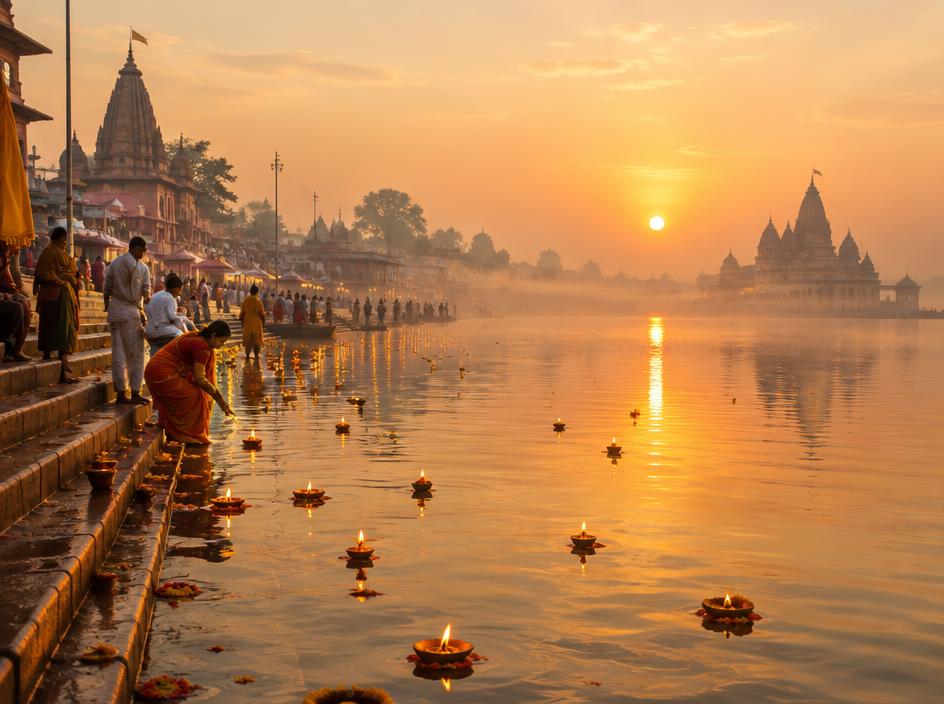
Saryu Aarti Ghat
Evening aarti on the banks of the sacred Saryu, where thousands of lamps are set afloat at dusk.
Ram Ki Paidi
The grand renovated ghats along the Saryu — centre of Deepotsav, when lakhs of diyas light the riverbank.
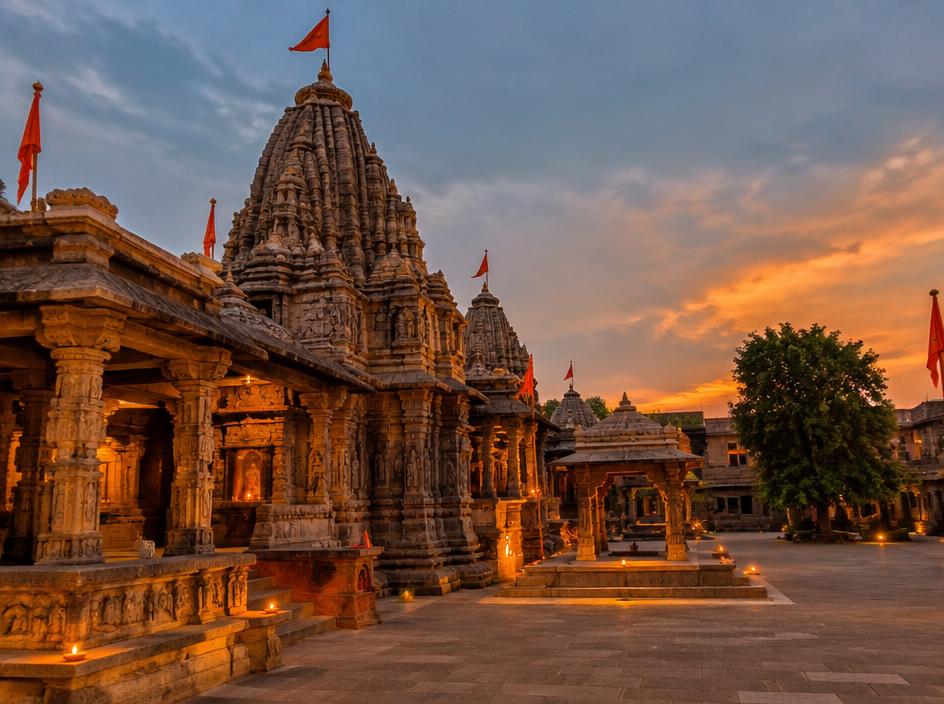
Nandigram (Bharat Kund)
Where Bharat ruled in Rama's name for fourteen years — ancient shrines and a sacred kund, 20 km south of the city.
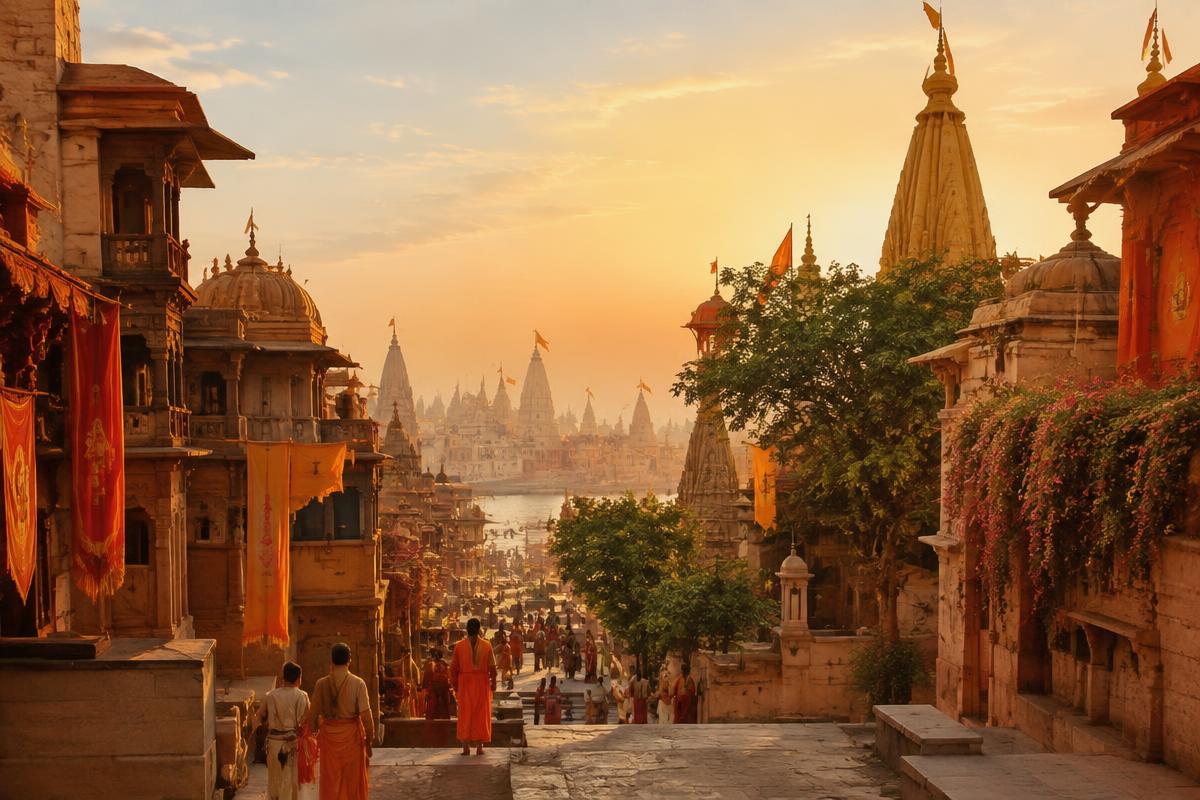
Guptar Ghat
The 'hidden ghat' where, legend holds, Lord Rama took jal samadhi — serene, with the Chakrahari and Gupta Harji temples.
The Eternal City
One of the seven holiest cities of Hinduism (Sapta Puri), Ayodhya sits on the banks of the Saryu in Uttar Pradesh. Believed to be the capital of the ancient Kosala kingdom and the setting of the Ramayana, its lanes have carried pilgrims for millennia — and today the city is reborn around the new Ram Mandir.
The Epic Age
Birthplace of Lord Rama and heart of the Ramayana, India's defining epic.
A Living Heritage
Centuries of temples, ghats, akharas and festivals kept alive by daily worship.
The City Today
A modern pilgrimage hub with a new airport, grand ghats and Deepotsav, the world's largest festival of lamps.
How to reach & when to go
Getting there
- By Air
- Maharishi Valmiki International Airport, Ayodhya Dham — about 8 km from the mandir.
- By Rail
- Ayodhya Dham Junction and Ayodhya Cantt, on the Lucknow–Gorakhpur line.
- By Road
- Well connected by highway — about 135 km from Lucknow and 200 km from Varanasi.
Best time
- ❄ October to March — cool, clear days ideal for darshan and aarti.
- ✦ Ram Navami (Mar–Apr) — the city's most sacred festival.
- ✦ Deepotsav (Diwali) — lakhs of diyas along Ram Ki Paidi.
Good to know
- • Darshan at the Ram Mandir is free; book slots online in advance during festivals.
- • Phones, bags and cameras are not allowed inside the mandir — lockers are provided.
- • Dress modestly and carry a light shawl for early-morning aartis.
Support the Ram Mandir Trust
Your contribution helps preserve the sanctum, fund daily aartis and care for pilgrims from every corner of the world. Donations go to the official Shri Ram Janmabhoomi Teerth Kshetra Trust.
Ayodhya.help — an independent guide. The donate button links to the official Shri Ram Janmabhoomi Teerth Kshetra Trust; always confirm details before you travel.